Rechercher dans ce blog

2017/02/23

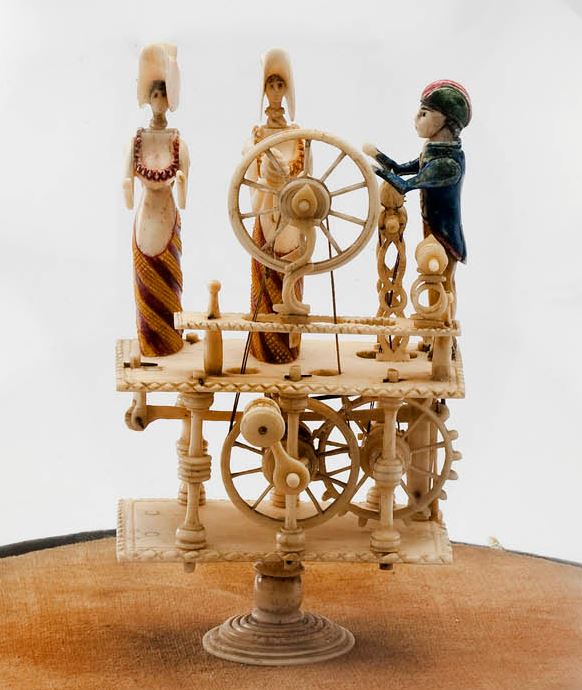
Spinning Jenny Automaton With Trumpeter

  Spinning Jenny Automaton With Trumpeter 


(artistes, lieu,  et date inconnus)


(artistes, lieu,  et date inconnus)


!!!!!!!!!!!!!!!!!!!

2016/08/25

Tara's Palace Museum of Childhood Irelande

Powerscourt House & Gardens, Bray Road, Enniskerry, Co. Wicklow, Irlande


Tara's Palace Museum of Childhood

furnishings carved from ration bone pieces by Napoleonic prisoners of war

2016/07/14

Folk Art Locomotive Mutton Bone Inkwell

Napoleonic Prisoner of War (?) Folk Art Locomotive Mutton Bone Inkwell.

(artiste et date inconnus)


Dimensions: Length 4 1/4 in, Width 1 1/2 in, Height 3 1/4 in.


§§§§§§§§§§§§§§§

2016/04/13

Automate en os à cinq personnages polychromes dit « Spinning Jenny »

Automate en os à cinq personnages polychromes dit « Spinning Jenny »

Encheres Auxerre


(artiste et date inconnus)


Automate en os à cinq personnages polychromes dit « Spinning Jenny ». Mécanique à la base actionné par une manivelle. Travail de ponton. Angleterre Début XIX°. Haut 14,5cm.
Petits accidents et collages. Présenté sous un globe en verre rapporté


//


//

2016/01/19

NAPOLEONIC FRENCH PRISONER OF WAR BONE 98-GUN SHIP MODEL

NAPOLEONIC FRENCH PRISONER OF WAR BONE 98-GUN SHIP MODEL

Item direct from brand 


photo: Sotheby's 


(artiste et date inconnus)


LOT 19
NAPOLEONIC FRENCH PRISONER OF WAR BONE 98-GUN SHIP MODEL, EARLY 19TH CENTURY
Estimate  
5,000 - 8,000 USD
Height excluding glass dome 11 3/4 in.
Mounted on a later ebonized base with glass dome, including a plaque inscribed H.M.S. Glory - 98 Guns / 'The Glory' was launched at Plymouth in 1789. In 1794 she joined Lord Howe's fleet and distinguished herself at the Glorious 1st of June. She was engaged in the blockade of Cadiz and Cartegena in 1805 flying the flag of Sir John Orde, and the same year under Captain S. Warren took part in Calder's action off Ferrol. Form 1809 to 1815 she was prison ship at Chatham. 


!!


!!

2015/11/06

Working pump Carved from bone, mounted on a mother-of-pearl.

Napoleonic prisoner-of-war working pump Carved from bone, mounted on a mother-of-pearl

(artiste et date inconnus)


::


::

2015/05/23

Blown Oval Blown Glass Diorama

Blown Oval Blown Glass  Diorama

(artiste et date inconnus)


crédit: http://oneofakindantiques.com     diorama

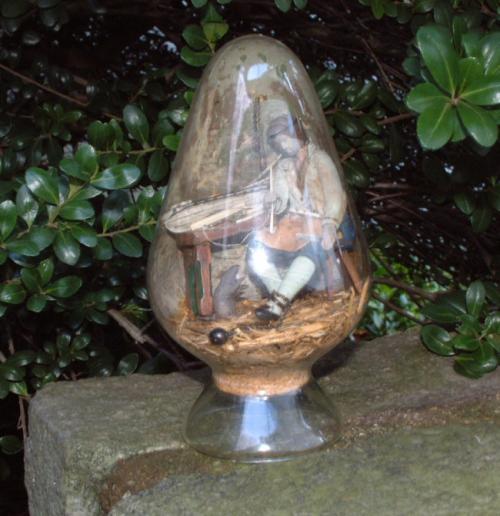
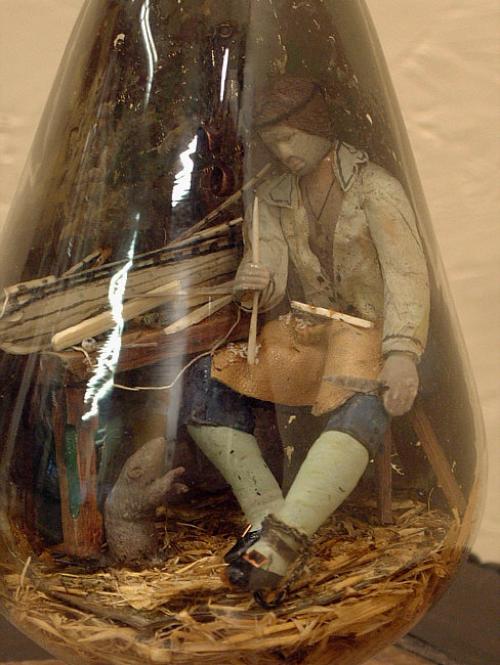
Late 19th century diorama in blown glass vessel depicting a French prisoner of war, seated on a stool beside a bench,with a bone model of a ship. A pair of manacles hangs on the wall, a ball and chain is clamped to his foot, and a large rat keeps him company.l Made of bone, wood, metal, cloth,leather , straw and pigment. Note, jeweler and watchmakers in Ghent were conscripted by Napoleon to serve in his war with England. They were captured and imprisoned by the British. They passed the time by carving intricately detailed ship models and dioramas out of bones left from their meals or what ever wood they found. This diorama measures 6 inches high.(onefakindantiques.com)


..

(artiste et date inconnus)

..

Guildhall Museum in Rochester

Guildhall Museum in Rochester


The models and toys were made by French prisoners of war, held in hulks and prisons. (Dartmoor prison was originally built for French pows).
Prison uniform was a shirt, trousers and coat, all in saffron yellow with TO stamped in black front and back.
Ordinary prisoners were paid 21/2 p a day, going up to 11 shillings a day for a captain. Higher ranking officers could chose to be put on parole.
The weekly food allowance for each man was 101/2 lbs of bread, 21/2 lbs of meat, 2 lbs of fish + potatoes and other vegtables.
The men were allowed to make articles for sale with the full approval of the goverment. Markets, open to all inside and out, were set up in the prison yard. Objects made by the prisoners would range from simple knick-knacks to ship models up to 5 foot long, quite often a group of men would get together to build a model. Models could be built to commision and there are even accounts of French pows forging banknotes!
Beef bone was the most commonly used material, followed by mutton, veal and whale bone. Baleen, tortoishell,wood, metal, hair and twine were also used, these, as well as paints and handtools were easily available as trade.

Crédit

2014/12/06

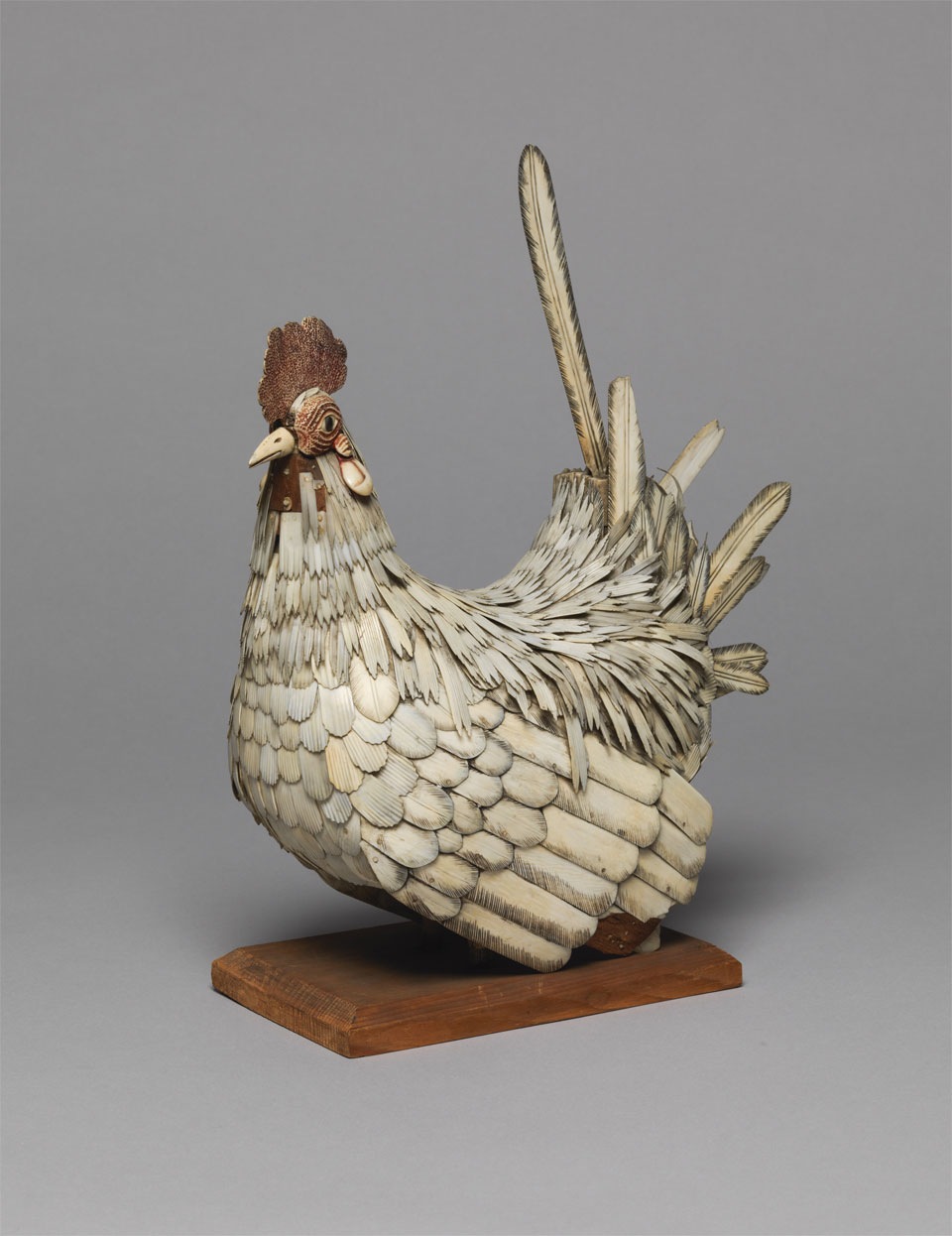
Coq sculpté par prisonnier français des pontons XVIIIeme siecle .

Coq sculpté par prisonnier français des pontons XVIIIeme siecle .
Tate London folkart hexibition 2014


artiste et date inconnus


..


..

2014/11/07

Artistes et dates inconnus sauf peut-être la Spinning jenny de 1809, faite par Etienne Vongurt ?


 Artistes et dates inconnus
sauf peut-être la Spinning jenny de 1809, faite par Etienne Vongurt ?


*****************************************************

https://www.bonhams.com/auctions/21851/lot/28/
8 Oct 2014 14:00 BST London, Knightsbridge


wwwwwwwwwwwwwwwwwwwwwwwwwwwwwwwwwwwwwwwwwwwwwwwwwwwwwwwwww


wwwwwwwwwwwwwwwwwwwwwwwwwwwwwwwwwwwwwwwwwwwwwwwwwwwwwwwww
  Spinning jenny de 1809,  faite par Etienne Vongurt , prisonnier français en Angleterre pendant les guerres napoléoniennes .
 Napoleonic PoW Spinning jenny made by Etienne Vongurt  1809.


§§§§§§§§§§§§§§§§§§§§§§§§§§§§§§§§§§§§§§§§§§§§§§§§§§§§§§§§§§§§§§§§§


******************************************************************************


.

MASSACRE DES PRISONNIERS DE GUERRE FRANCAIS DÉTENUS A BORD LE SAMSON LE 31 MAI 1811

MASSACRE DES PRISONNIERS DE GUERRE FRANCAIS DÉTENUS A BORD LE SAMSON LE 31 MAI 1811

 Shenandoah Davis


chronique par André Métayer: LES PONTONS DES GUERRES RÉVOLUTIONNAIRES ET NAPOLÉONIENNES

 Société Philatélique de Rennes

http://www.spr.asso.fr/crbst_60.html


2014/05/21

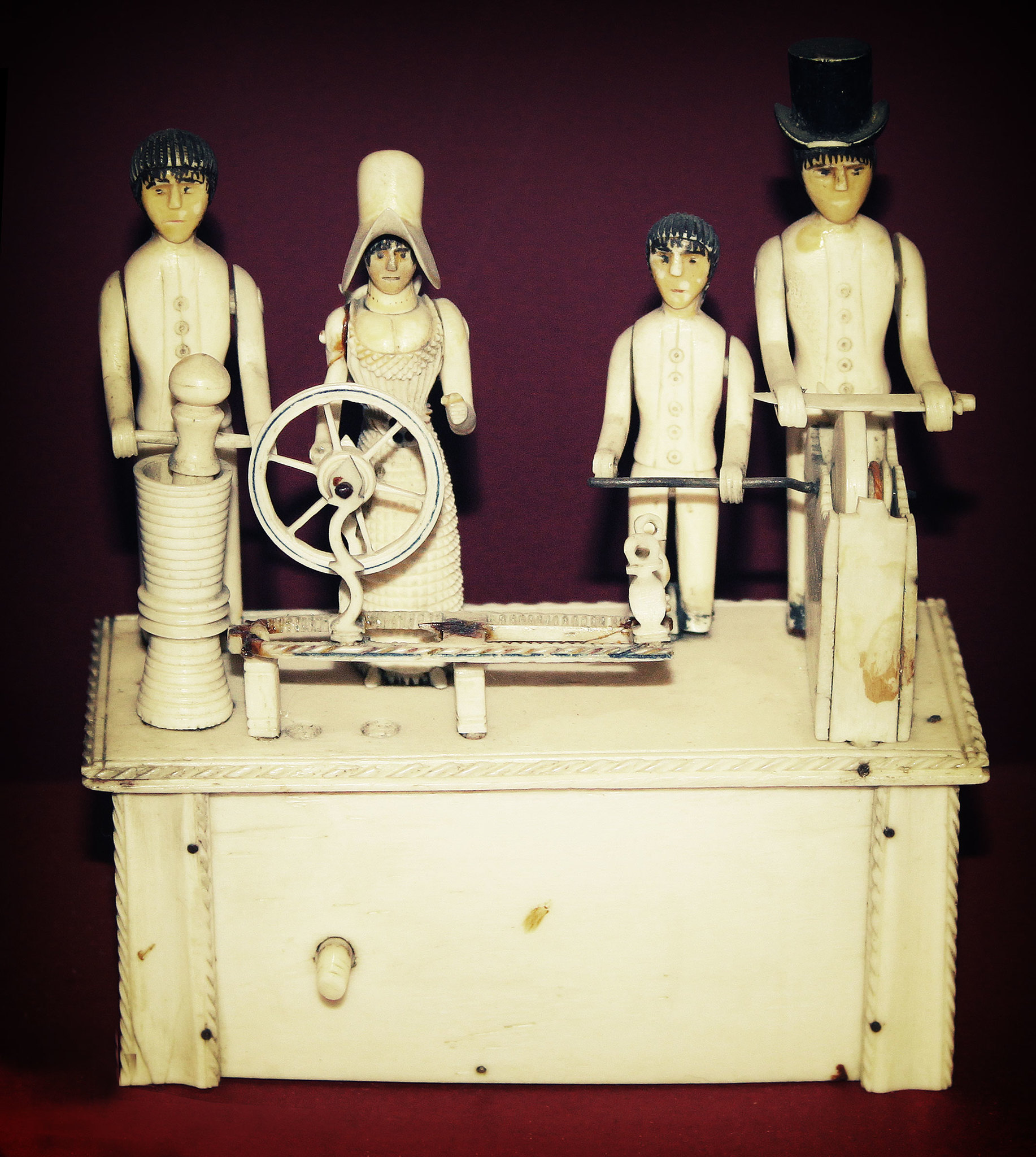
Deux modèles incomplets de «Jenny la fileuse»

Deux
modèles
incomplets de
«Jenny la fileuse»


§§§§§§§§§§§§§§§§§§§§§§§§§§§§§§§§§§§§§§§§§§§§§§§§§§§§§§§§§

2013/10/17

Guillotine Musée Bowers

http://www.bowers.org


.


.


.

2013/07/01

Pierre Barthélémy SAMSON (b.1777 Saint-Malo -d.1828 Nantes)

Pierre Barthélémy SAMSON (b.1777 Saint-Malo -d.1828 Nantes) was a French Napoleonic POW from 1803 to 1816 (?). He possibly was imprisoned on one or more of the English "prison ships" or in Norman Cross. His nickname was the toymaker, in fact he was marine carpenteur in Saint Malo.

2013/03/28

Rare treasures on a visit to Chatham's historic dockyards. BBC

http://www.bbc.co.uk/programmes/p016np31

Antiques Roadshow Series 35, Chatham Historic Dockyard 2
16/25 The team discover rare treasures on a visit to Chatham's historic dockyards.


Étonnante histoire d'une spinning jenny fabriquée par les prisonniers des camps ou pontons anglais, pendant les guerres napoléoniennes.   

BBC  video


 .


///////////////////////////////////////////////////////////////////

2013/02/06

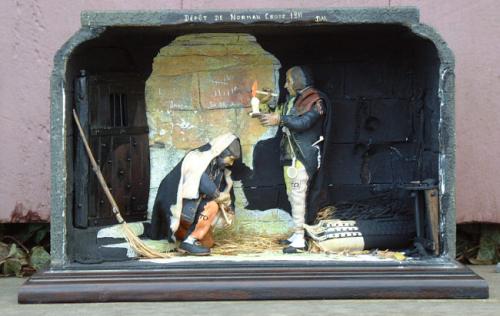
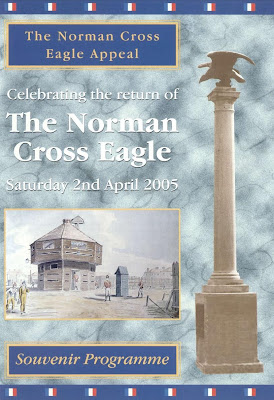
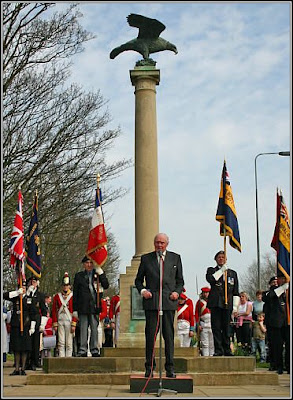
Les amis de Norman Cross...

https://sites.google.com/site/friendsofnormancross/


The Friends exists to promote interest in all things connected to the history of Norman Cross and its setting, in particular the Napoleonic Prisoner of War depot that existed on this site from 1797 to 1814.


https://sites.google.com/site/friendsofnormancross/

 Lynn Museumby Paul Biggins


from  :   https://sites.google.com/site/friendsofnormancross/a-detailed-history/6-life-in-the-depot

One of the soldiers stationed at the depot in 1799 later wrote an account of his garrison duty there. He recalled that in Autumn of that year his regiment proceeded:
"....to Norman Cross for the purpose of guarding some thousands of unhappy Frenchmen, cooped up in that place and clothed in yellow (the prison dress), to expiate their revolutionary sins by many years captivity and exile in loathsome prison, cut off from family and friends.
Their necessities forced them to exert their ingenuity in making various curious toys which the disposed of at a very low rate to enable them to procure a few comforts to alleviate their extreme wretchedness.....for want of clothes many of them suffered every privation rather than be clad in a conspicuous and humiliating colour."


..


2013/01/28

Peter Finer ... Spinning Jenny


Peter Finer, 38-39 Duke Street, St James's, London, SW1Y 6DF Size: H 22 x Diam 21 cm / 8.7 x 8.3 inches


artiste et date inconnus


..

2013/01/21

2010/04/05

PRISONNIERS DES PONTONS ANGLAIS PENDANT LES GUERRES NAPOLEONIENNES.


Site en hommage aux Prisonniers des pontons.

Durant les guerres de la révolution française et les guerres napoléoniennes, quantité de prisonniers des deux cotés de la Manche, passèrent de nombreuses années en captivité, soit dans des prisons, soit sur des pontons ancrés dans les ports ou dans les estuaires. Le plus grand camp anglais de prisonniers était situé près de Peterborough à Norman Cross. Ce camp a disparu depuis mais une croix aujourd'hui marque sont emplacement. Les autres camps étaient Dartmoor, Porchester Castle, Perth et Tunbridge . Les pontons où les prisonniers survivaient parfois pendant plusieurs années dans des conditions horribles, étaient pour la plupart pourris et infestés de rats, ils étaient ancrés à Chatham, Plymouth, Portsmouth et la Tamise.
Parmi ces prisonniers nombreux étaient des artisans qualifiés, tels que les sculpteurs d'ivoire de Dieppe, les joailliers, les horlogers et ébénistes. Ces prisonniers se regroupaient par corporation, chacun produisait des objets d'artisanat qu'il vendait pour pouvoir se procurer ce qui rendait la vie carcérale plus supportable, tel que rations supplémentaires de nourriture ou de tabac. Ils fabriquaient principalement des maquettes de bateaux, des boites, des bibelots, des ouvrages en marqueterie, des plateaux décorés avec des brins de paille, des rouets en ivoire, dominos, échiquiers....
A Perth en Ecosse, quelques prisonniers essayèrent de fabriquer de la fausse monnaie et des bons.
Les prisonniers utilisaient pour réaliser leurs ouvrages tout ce qui pouvait leur tomber sous la main. Les dépôts d'ordure étaient recherchés pour y récupérer les métaux.


Femmes et enfants prisonniers des pontons, dont Julienne David ...

Women and children napoleonic PoW  on hulk


LA SANTE DES PRISONNIERS DES PONTONS  1797  1814 (extraits)